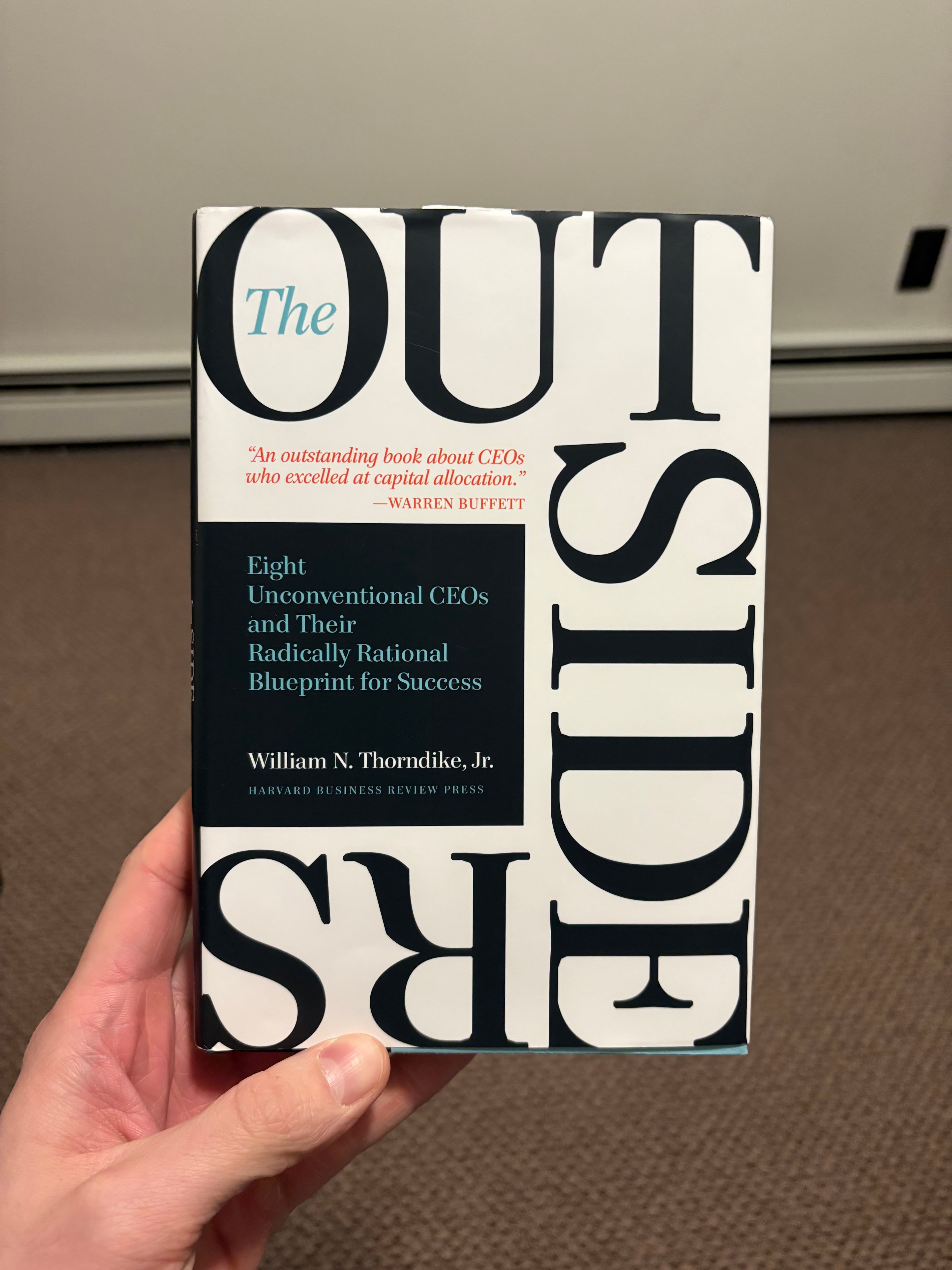
The Outsiders
by William N. Thorndike, Jr.
Date Read: January 30, 2026
Summary
The Outsiders details the extraordinary success of eight unconventional CEOs who took a radically rational approach to capital allocation. William Thorndike analyzed these leaders—including names like Warren Buffett (Berkshire Hathaway), Henry Singleton (Teledyne), and Tom Murphy (Capital Cities)—and found that they shared a common set of traits that differed sharply from their peers. They didn't focus on quarterly earnings or empire building; instead, they focused relentlessly on maximizing per-share value over the long term.
The core premise is that a CEO has two distinct jobs: running the operations efficiently and deploying the cash those operations generate. While most CEOs focus on the former, the "Outsiders" excelled at the latter. They treated capital allocation as their primary responsibility, often making contrarian moves like aggressive share buybacks when their stock was cheap, or avoiding dividends to reinvest in higher-return opportunities. The result? They outperformed the S&P 500 by a massive margin over decades.
My Favorite Takeaways
- Capital Allocation is King: The most important job of a CEO is capital allocation. It's not just about operations; it's about what you do with the money you make. Over the long term, returns are determined by how effectively cash is deployed.
- Cash Flow > Reported Earnings: These CEOs ignored conventional metrics like reported earnings and focused entirely on cash flow. They knew that accounting profits could be manipulated or misleading, but cash was reality.
- The Power of Buybacks: When their own stock was trading below intrinsic value, they bought it back aggressiveness. This simple act of shrinking the share count significantly boosted value per share for remaining shareholders—a strategy Henry Singleton pioneered at Teledyne.
- Decentralization: Almost all of these companies operated with incredibly lean corporate headquarters. They pushed decision-making power down to the local managers who knew the business best, reducing bureaucracy and fostering an entrepreneurial spirit.
- Patience and Boldness: They were willing to sit on cash for long periods when opportunities were scarce, but when a "fat pitch" came along, they bet big. They didn't feel the need to be active just for the sake of activity.
Real World Application
The "Outsiders" mindset reinforces the idea that "activity" does not equal "progress." In business and life, it is often better to focus less on vanity metrics—like revenue growth or social status—and more on the underlying value per unit of effort or capital.
Beware of the "institutional imperative," which is the pressure to mindlessly copy what everyone else is doing. Applying this to the real world means having the courage to look foolish in the short term to be successful in the long term. Whether it's investing, career choices, or life decisions, you must be comfortable standing apart from the crowd if the logic and math support your path.